
Innovation / Ideas

Electric vehicles as a grid asset

While electric vehicles still represent a small fraction of vehicles on the road today, research has shown that it takes relatively few EVs on one distribution feeder to have a significant effect on the overall performance of the grid. As a result, stakeholders are looking for tools and programs to leverage EVs as a grid asset rather than a liability.
How Do All-Electric Cars Work?

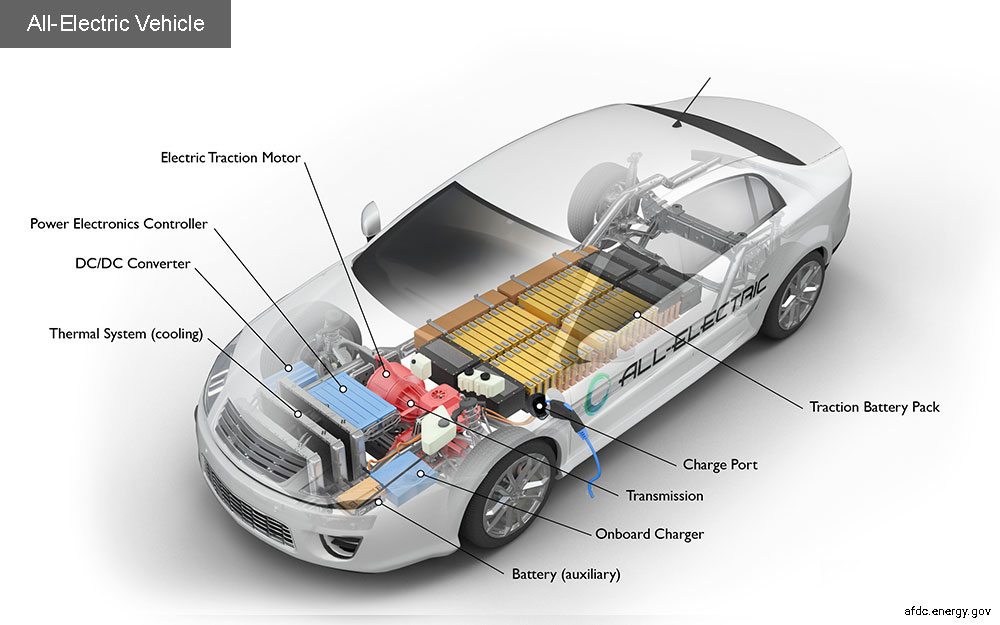
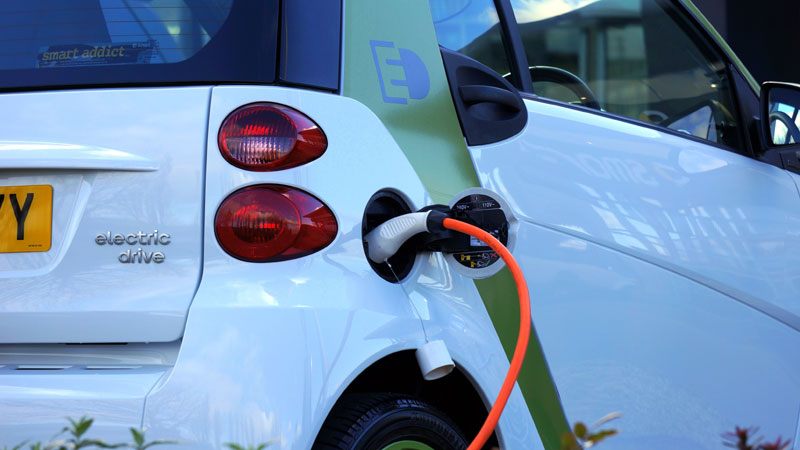
All-electric vehicles (EVs), also referred to as battery electric vehicles, have an electric motor instead of an internal combustion engine. The vehicle uses a large traction battery pack to power the electric motor and must be plugged into a wall outlet or charging equipment, also called electric vehicle supply equipment (EVSE). Because it runs on electricity, the vehicle emits no exhaust from a tailpipe and does not contain the typical liquid fuel components, such as a fuel pump, fuel line, or fuel tank.

Key Components of an All-Electric Car

Battery (all-electric auxiliary)

In an electric drive vehicle, the auxiliary battery provides electricity to power vehicle accessories.

Charge Port

The charge port allows the vehicle to connect to an external power supply in order to charge the traction battery pack.

DC/DC Converter

This device converts higher-voltage DC power from the traction battery pack to the lower-voltage DC power needed to run vehicle accessories and recharge the auxiliary battery.

Electric Traction Motor

Using power from the traction battery pack, this motor drives the vehicle's wheels. Some vehicles use motor generators that perform both the drive and regeneration functions.

Onboard Charger

Takes the incoming AC electricity supplied via the charge port and converts it to DC power for charging the traction battery. It also communicates with the charging equipment and monitors battery characteristics such as voltage, current, temperature, and state of charge while charging the pack.

Power Electronics Controller

This unit manages the flow of electrical energy delivered by the traction battery, controlling the speed of the electric traction motor and the torque it produces.

Thermal System (cooling)

This system maintains a proper operating temperature range of the engine, electric motor, power electronics, and other components.

Traction Battery Pack

Stores electricity for use by the electric traction motor.

Transmission (electric)

The transmission transfers mechanical power from the electric traction motor to drive the wheels.

EVs have several advantages over conventional vehicles

Energy Efficient

EVs convert over 77% of the electrical energy from the grid to power at the wheels. Conventional gasoline vehicles only convert about 12%–30% of the energy stored in gasoline to power at the wheels.

Environmentally Friendly

EVs emit no tailpipe pollutants, although the power plant producing the electricity may emit them. Electricity from nuclear-, hydro-, solar-, or wind-powered plants causes no air pollutants.

Performance Benefits

Electric motors provide quiet, smooth operation and stronger acceleration and require less maintenance than internal combustion engines (ICEs).

Reduced Energy Dependence

Electricity is a domestic energy source. EVs have some drawbacks compared to gasoline vehicles.

Driving Range

EVs have a shorter driving range than most conventional vehicles—although EV driving ranges are improving. Most EVs can travel more than 100 miles on a charge, and some can travel in excess of 200 or 300 miles depending on the model.

Recharge Time

Fully recharging the battery pack can take 3 to 12 hours. Even a "fast charge" to 80% capacity can take 30 min.

Batteries for EVs are designed for extended life, and a study by DOE's National Renewable Energy Laboratory suggest these batteries may last 12 to 15 years in moderate climates and 8 to 12 years in severe climates. However, these batteries are expensive, and replacing them may be costly if they fail.